









APAC CIOOutlook
About UsConferencePartner With Us
  • Technologies
    • Blockchain
      Data Intelligence and Management
      Digital Transformation
      FinTech
      Generative and Agentic AI
      Low Code No Code
      Mobile Application
      Networking
      Robotics
      Storage
      Wireless
  • Industries
    • Automotive
      Aviation
      Banking
      Construction
      E-Commerce
      Food and Beverages
      Healthcare
      Insurance
      Logistics
      Manufacturing
      Retail
      Supply Chain
      Travel and Hospitality
  • Platforms
    • Microsoft
      Salesforce
      SAP
  • Strategic Solutions
    • Business Intelligence
      Contact Center
      Corporate Finance
      CRM
      Cyber Security
      Data Center
      Enterprise Asset Management
      Enterprise Performance Management
      IT Infrastructure and Services
      Managed Services
      Procurement
      Unified Communication
      Workflow
  • Home
  • CXO Insights
  • Leadership Perspectives
  • Innovation Insights
  • Research
  • News
  • Whitepapers
  • CXO Awards
#

Apac CIOOutlook Weekly Brief

×

Be first to read the latest tech news, Industry Leader's Insights, and CIO interviews of medium and large enterprises exclusively from Apac CIOOutlook

Subscribe

loading

THANK YOU FOR SUBSCRIBING

  • Home
  • Data Center
Editor's Pick (1 - 4 of 8)
left
Hybrid IT - The New Reality

Ramesh Munamarty, Group CIO, International SOS

Universal Digital Identity-How to Get it Right?

Dr. Michael Gorriz, Group CIO, Standard Chartered Bank

Data Center of the Future

Ari Bose, CIO, Brocade

Centricity of Data Science in the IT World

Harpreet Kaintel, CIO, ZenithOptimedia Group

Encryption-is it enough?

Jerry Irvine, EVP, CIO, Prescient Solutions

The Evolution of Enterprise AI: Balancing Innovation, Governance and Business Value

Ashley Wan, Regional Data & Analytics Director, Apac, Richemont

Will AI Replace Lawyers?

Ker Shing Chock, Head of Legal & Compliance, DBS Bank Ltd. Malaysia

Building a Formal Enterprise-Wide Data Governance: From People to Capabilities Enablement

Toni Hutomo Putro, CDMP, Head of Data Governance, Adira Finance

right

Faster, Safer Data Hosting Starts with a Map

Mark Bauer, Managing Director & Co-Lead Of The Data Center Solutions, JLL

Tweet
content-image

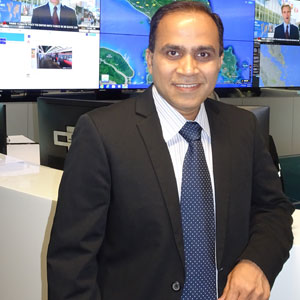
Mark Bauer, Managing Director & Co-Lead Of The Data Center Solutions, JLL

Where your co-location facility is located has a profound impact on security and latency reduction.

The days are numbered for hosting your data in a co-location facility in the middle of nowhere, miles and miles of transmission cable from your metropolitan headquarters. With the proliferation of the Internet of Things, latency, processing speed, and security have become top priorities for organizations that need to share and analyze data in real time. And that’s true for most businesses today.

Business continuity is contingent upon a reliable connection to data and applications hosted off-site. Increasingly, these remote, lower-cost locations are not feasible for the pace of business today, and that means having a data center closer to ‘home.’

Indeed, where your data lives has a direct impact on download and upload time, as well as your company’s ability to effectively recover from disaster. That's why the most effective locations for data hosting and processing are more likely than not to be those close to operations and customers, in an area with mild weather and with low-cost energy infrastructure. As data-centric enterprises increasingly look to third-party co-location as a flexible and cost-efficient alternative to managing complex technology and infrastructure in-house, physical location can make a major difference in business productivity.

Yesterday's RFP: Not a fit for today's data center outsourcing

Demand for sophisticated data center services is skyrocketing. Last year, independent data center operators in the United States earned revenues of $115.3 billion and grew 6.1 percent, according to JLL's annual Data Centers Report. That demand isn't coming from just one sector, either. With security concerns permeating the digital world, sectors from retail to finance to government are seeking sophisticated hosting and processing services that can drive productivity and resiliency across their footprint.

Following are key considerations for information leaders seeking a new path forward in data center outsourcing strategy:

• Get real estate-savvy: The 15 hottest markets for data center activity across the country—as identified in JLL research—share a mix of large populations, appropriate talent pools, affordable energy costs and amenable infrastructure. The clear leader is Northern Virginia, with more than 60MWs of absorption last year, and additional growth expected to come.

Yesterday's RFP: Not a fit for today's data center outsourcing

However, many organizations will need more than one location, making it especially valuable to look outside the hottest markets to suit their unique needs. For example, Reno is emerging as a strong alternative to San Francisco/ Silicon Valley, where data center availability in 2016 is expected to be less than 2 percent—a shortage that contract costs are certain to reflect. In contrast, data center clients in Reno benefit indirectly from low electricity costs and no corporate income taxes that translate into lower hosting fees.

• Know what to look for in security offerings: Physical and cyber security can differ widely from center to center— and each detail can play a role in data integrity. In modern co-location facilities, look for well-maintained, highly secure fencing, video monitoring of access points, human guards, and high-tech access controls from the parking lot to each client server rack. For example, dual authentication, such as a badge reader and biometric scanner, will ensure that only authorized personnel can access the data center floor.

• Don't pay for what you don't need: Different sectors face different connectivity and compliance challenges, so it's fitting that data centers offer different levels of service and rigor. A standard procurement process might miss opportunities to avoid higher-cost services you don't need. Financial institutions, for example, need to be SOC-compliant, which requires capabilities, controls and processes available only with top-tier facilities. Companies in other industries might not need these costly options.

• Do negotiate: Ancillary IT services, security offerings, and proximity all play a huge role in rates and reductions— and these aspects of third-party data center services are not cut-and-dry costs that would fit a standard procurement model. Every circuit and cross-connect can be a negotiation point that ultimately influences costs over time. What happens if 100 percent uptime is not achieved? What are the remedies? What are the renewal options? These are topics for the negotiations table.

• Think big picture: No organization wants to drop millions into equipment for its co-location space for a three-to-five-year lease and end up without longer-term contingency plan. How can the data center support an evolving strategy?

• Know the operator's pressure points: Energy, tax, and construction costs are not your headaches when you choose to outsource data hosting and processing. But, they are helpful in negotiations on multiple levels. For one thing, it's easier to sell your C-suite colleagues on the higher costs of a data center that has valuable proximity to your users, and therefore, reduces latency and drives productivity.

Meanwhile, when you know what the data center operators are really grappling with in terms of financial and geographic pressure, you can better negotiate a contract that balances their costs with your demands.

• Leverage data-centric real estate partners to arrange partnerships: Many IT professionals perceive the data center hosting decision as an IT challenge alone, but it is also a real estate challenge. Qualified real estate advisors can bring the insight and negotiating skills to the table at no charge to your company. A qualified real estate partner is data center agnostic, will have a track record in negotiating complex hosting agreements, and has a deep understanding of local market conditions including tax incentives, current and future planned capacity, and co-location pricing options. They can offer sophisticated data and business intelligence tools for researching your optimal data center location based on power costs, natural hazards to infrastructure, network latency requirements, and proximity to corporate headquarters, among other factors.

The data center of the future is at hand. With the plethora of third-party co-location options in the marketplace, even the most sophisticated IT team needs to be armed with the best insights and negotiating power to secure the best solution for its organization.

tag

Financial

Construction

Weekly Brief

loading
Data Center Cooling Solution Company of the Year in APAC - 2025
Featured Issue
Previous Next

I agree We use cookies on this website to enhance your user experience. By clicking any link on this page you are giving your consent for us to set cookies. More info

APAC CIOOutlook
Follow on LinkedIn

About

  • Home
  • About Us
  • Partner With Us

Stay Connected

  • Subscribe
  • Newsletter
  • Sitemap

Contact Us

  • editor@apacciooutlook.com
  • sales@apacciooutlook.com
  • marketing@apacciooutlook.com

Legal

  • Editorial Policy
  • Privacy Policy
  • Terms of Use

© 2026 APAC CIOOutlook. All rights reserved. Headquarteblue in Fort Lauderdale, FL, USA.

This content is copyright protected

However, if you would like to share the information in this article, you may use the link below:

https://data-center.apacciooutlook.com/ciospeaks/faster-safer-data-hosting-starts-with-a-map-nwid-4572.html